
Walmart Marketplace vs Amazon: Which Is Better for Arbitrage Sellers in 2026?
If you’re an arbitrage seller, you want to choose where you sell based on profitability, competition, and how smoothly you can run your operation.
In 2026, the two biggest avenues are Amazon and Walmart Marketplace, but which is better?
Well, the honest answer is that they’re both awesome options for making money; but which one is best depends on your own personal selling style. In our opinion: Amazon is still best for volume, but Walmart Marketplace can be better for lower competition and diversification, especially if you want to reduce your dependence on one platform.
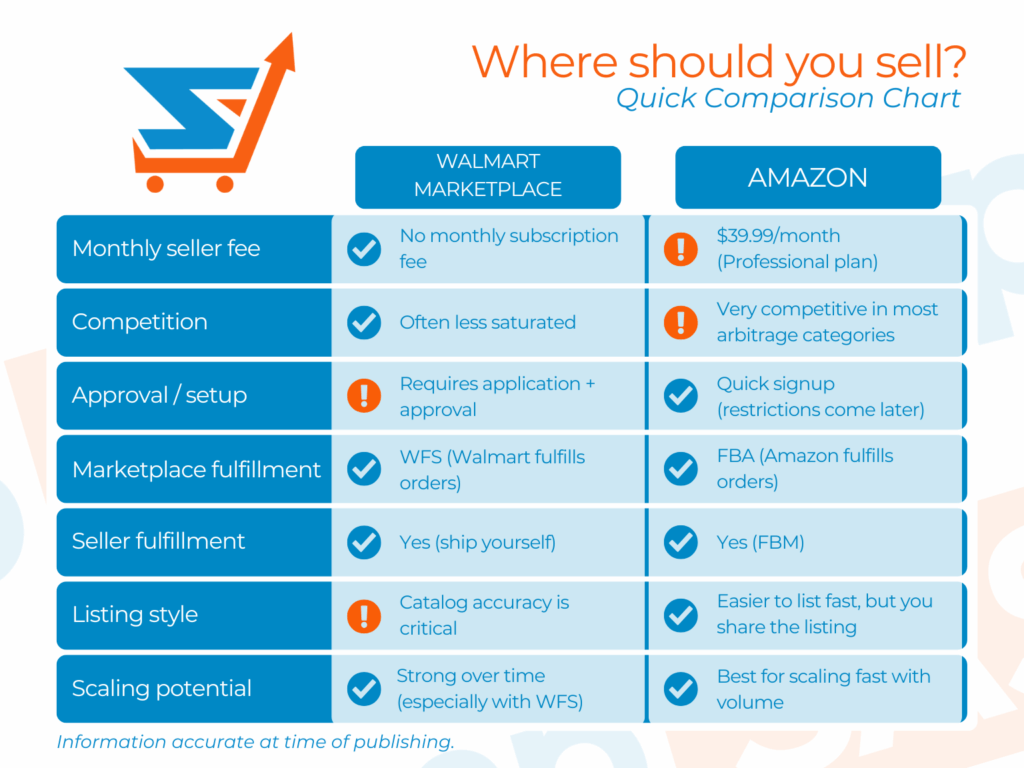
Walmart Marketplace is a strong option for arbitrage sellers who want a cleaner competitive environment and no monthly subscription fee.
Amazon is still the best choice for sellers chasing speed and high sales volume.
Why Sellers Are Looking at Walmart Marketplace in 2026
Amazon is still the largest marketplace for third-party sellers, but it comes with a predictable problem: saturation. You can find a profitable flip and watch the price fall within days once more sellers jump onto the listing.
Walmart Marketplace is attractive because many listings still have fewer sellers competing, which can make pricing more stable and margins easier to protect. Walmart Marketplace has existed since 2009 and is now a serious channel sellers use to scale.
Fees & Costs: Which Platform Is Better for Arbitrage?
Walmart Marketplace fees are based mainly on category referral fees, which vary depending on what you sell. The big advantage for new or part-time sellers is that Walmart doesn’t charge a monthly subscription fee. That makes it easier to test products without feeling pressured to sell enough to “cover your monthly.”
Amazon is still profitable for arbitrage, but the cost structure can feel heavier, especially if you’re stacking multiple fees through FBA or holding inventory too long. Amazon’s Professional seller plan costs $39.99 per month*, which potentially adds pressure for smaller sellers to maintain consistent sales volume.
Competition: Where Can Arbitrage Sellers Win More Consistently?
For many arbitrage resellers, Amazon is both the biggest opportunity and the biggest frustration. The demand is huge, but competition is relentless. If you’re not fast, priced well, and operationally tight, you can lose profit quickly to price drops and Buy Box battles.
Walmart Marketplace tends to feel less chaotic. It isn’t “easier,” but it can be less crowded, which helps sellers who prioritize stable margins over constant repricing. If you’re tired of watching a great Amazon flip get destroyed by saturation, Walmart may be the better environment for the same type of inventory.
Fulfillment: WFS vs FBA
Walmart Fulfillment Services (WFS) allows sellers to outsource fulfillment to Walmart. Walmart handles picking, packing, and shipping, and also supports customer service and returns for WFS orders. Walmart also states WFS supports 2-day fulfillment, with exceptions for large or heavy items.
Amazon’s Fulfillment by Amazon (FBA) is still the most proven fulfillment option for resellers who want to scale quickly. It can boost conversion rates and simplify day-to-day operations, but you need to watch margins carefully if inventory sits too long.
Approval & Restrictions: Which One Is Easier to Start?
Walmart Marketplace usually requires an application and approval before you can sell. This slows down the start, but can result in a higher-quality seller ecosystem.
Amazon is faster to join, but many arbitrage sellers run into restrictions later through gated brands or category limitations. That makes Amazon easier to begin, but not always easier to expand with typical arbitrage inventory.
Listing Quality: Walmart Rewards Accuracy
Walmart puts more emphasis on clean catalog data and accurate listings. If your listings are sloppy or mismatched, you may struggle to convert or even get visibility.
Amazon is more familiar for arbitrage sellers because you can often list quickly against existing product pages, but you’re usually competing directly on shared listings with multiple sellers.
Which Platform Should You Choose in 2026?
If you want a straightforward recommendation: Walmart Marketplace is an excellent choice if you want diversification, fewer price wars, and lower overhead, especially because there’s no monthly subscription fee.
Amazon is still the best option if your goal is maximum sales volume, but you’ll need to compete aggressively and justify the monthly Pro plan cost.
For many serious arbitrage sellers, the best long-term play is selling on both. Amazon becomes the volume engine, while Walmart becomes a stability channel that protects you when Amazon gets overcrowded or restricted.
*Pricing correct at time of publishing
Amazon Seller looking to diversify, or new to arbitrage altogether?
Start by testing both marketplaces with a small batch of your safest, most predictable items. Once you confirm consistent sales and clean operations, scale the winners! If you haven’t tried it yet, SellerAmp SAS is the perfect sourcing tool for Amazon, and now the brand new WAMP smart analysis tool is available for use with Walmart Marketplace! Take a look and try for yourself, just hit the button below 👇