
Amazon Seller Fees Explained

Amazon Seller Fees Explained
The cost structure for selling on Amazon is complex and multifaceted, encompassing various charges that sellers must account for to accurately calculate profitability. These fees are broadly categorized based on the type of expense – such as commissions, fulfillment, and optional services – and vary significantly based on product category, fulfillment method (FBA vs. FBM), and the seller’s account type (Individual vs. Professional). Understanding these components is critical for building a successful e-commerce business on the Amazon platform. In this guide we’ll provide a clear, up-to-date (as of February 2026) breakdown of all Amazon seller fees, how they are calculated, and how to factor them into real profitability.
Referral Fees
Often referred to as the commission, is charged by Amazon on every sale made through its marketplace. This fee is calculated as a percentage of the total sales price (including the item price, shipping cost, and any gift-wrap charges) and is dependent on the product category. Referral fees differ by Amazon’s internal product classification, which may not match the visible category tree.
Amazon uses several commission calculation models for Referral Fees, depending on category:
- Fixed Percentage – A single percentage applied to the entire sales price.
- Variable Percentage – Different fixed percentages apply depending on the item’s price.
- Tiered Percentage – Multiple percentage bands are applied to different portions of the sale price, then totaled.
Some categories have a minimum referral fee. If 15% of the total sales price is lower than the minimum (e.g. $0.30), Amazon charges the seller the minimum fee instead.
Fulfillment Fees
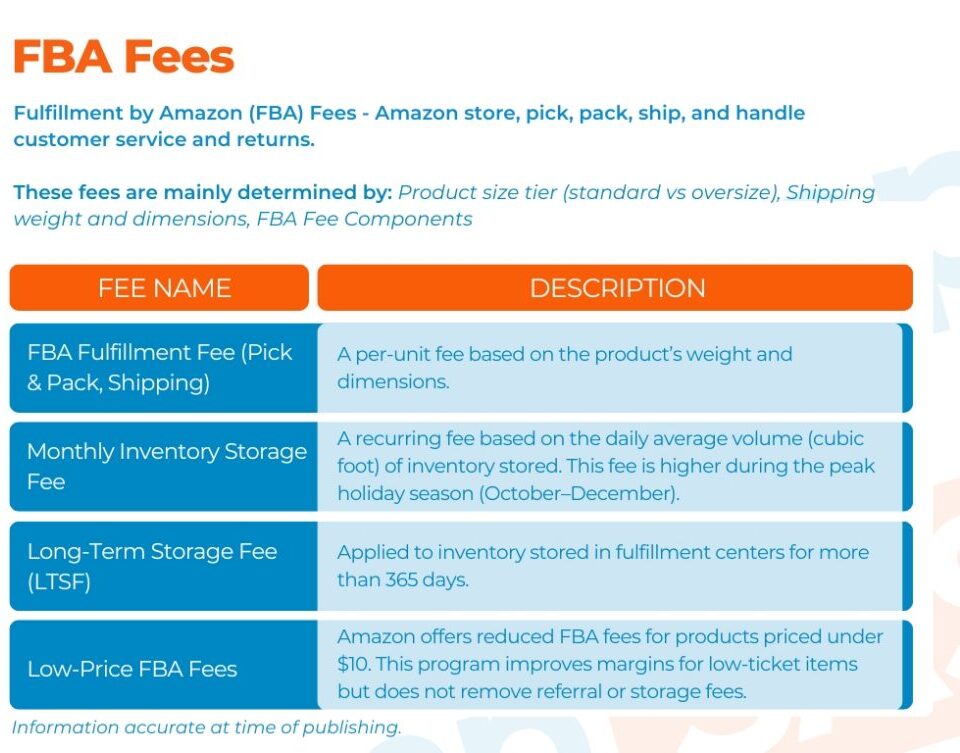
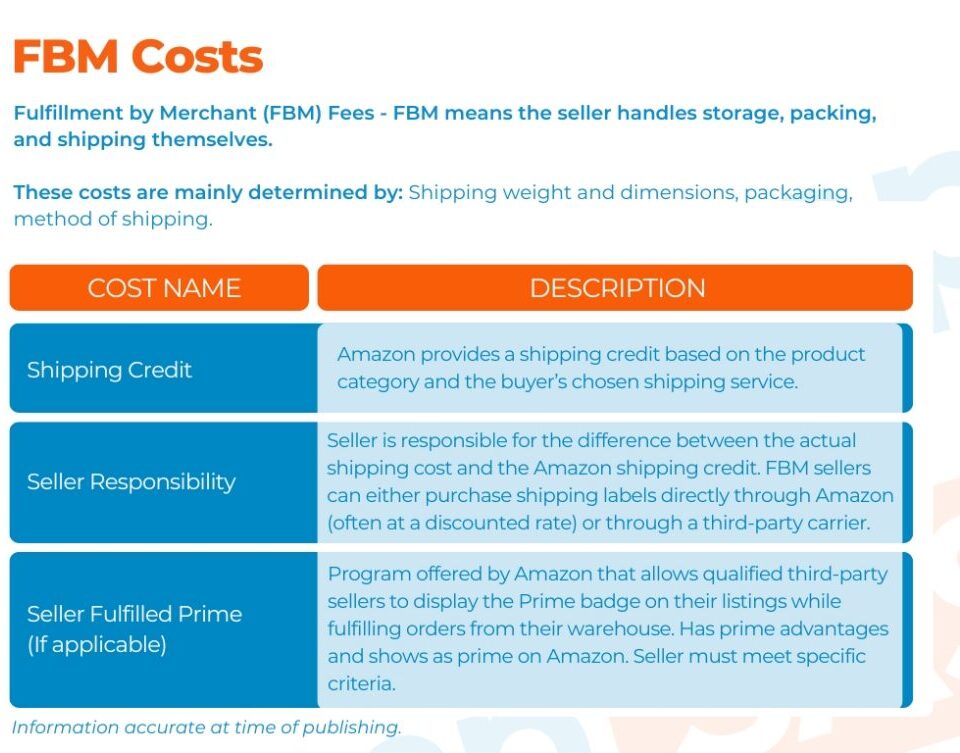
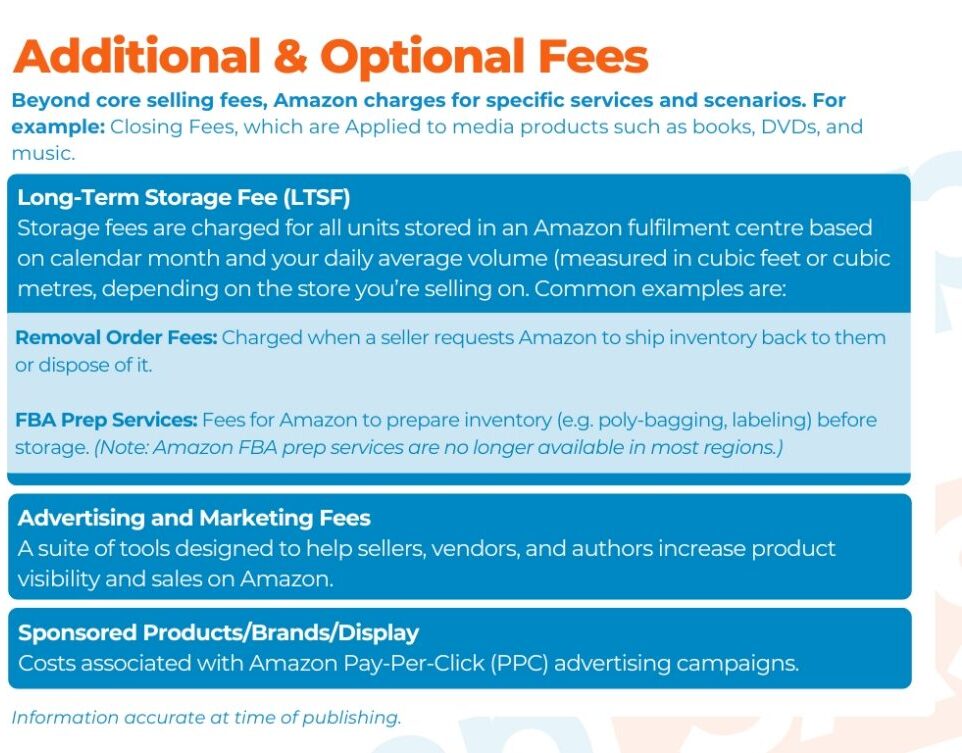
These fees depend on how the product reaches the customer and who handles logistics. Amazon offers two primary fulfillment models – FBA and FBM.
European FBA Variants (UK & EU Sellers)
European fulfillment introduces additional cost structures.
- EFN (European Fulfillment Network): Higher than standard FBA but product is stored in home marketplace and shipped to other European countries
- Pan-EU FBA: Product stored in other European countries and shipped to customers at the local rate. Must be VAT registered in all countries where the product is stored. This open is only suitable for large volume sellers.
Seller Account Fees
Amazon offers two main types of selling plans, each with a distinct fee structure.
- Professional Selling Plan – The Professional plan is designed for sellers who anticipate selling more than 40 items a month.
Fee: A fixed monthly subscription fee (e.g. $39.99/month).
Benefits: Access to bulk listing tools, inventory management features, eligibility for Buy Box, and setting custom shipping rates. - Individual Selling Plan – This plan is suitable for sellers selling fewer than 40 items per month.
Fee: No monthly subscription fee.
Per-Item Fee: A fixed fee (e.g. $0.99) is charged for every item sold, in addition to the Referral Fee.
Calculating Amazon Seller Profitability
To determine the true profitability of a product, a seller must subtract all applicable Amazon fees, cost of goods sold (COGS), and other business expenses (e.g. marketing, overhead) from the selling price.
Profitability Formula
Total Revenue: Selling Price + Shipping/Gift-Wrap
Amazon Fees: Referral + Fulfillment + Per-Item + Storage + Other
Gross Profit: Revenue − (COGS + Amazon Fees)
Net Profit: Gross Profit − Advertising − Overhead
Ignoring advertising, storage, or refund impact is a common and costly mistake!
Why Amazon Fees Impact Success
Amazon fees can define a seller’s pricing strategy, sourcing decisions, and scalability. Sellers who understand the full fee stack can price confidently, avoid margin traps, and grow sustainably across marketplaces.
Want to know more about selling on Amazon and get tips on how to make your business the best it can be? Check out our News & Updates page for learning materials, seller success stories and industry insights!